





Wittenborg University Nieuws
Self-actualisation and the young generation
By means of a ‘master class’ the Veluwse Onderwijsgroep (a group of primary and secondary schools in Apeldoorn) has launched its Academy (to share knowledge and help teachers to further professionalise). I had the privilege of attending this gathering on behalf of Wittenborg.
Mathieu Weggemans talked about how today’s students behave in a way which substantially differs from the older generation. He explained this by referring to Maslow’s hierarchy of needs. Although this theory was not unknown to me, I was motivated to look into it again.
According to Maslow, the final level of psychological development can be achieved when all basic and mental needs are fulfilled and actualisation of the full personal potential takes place. The young generation in many places on earth seems to have reached that stage. Work – when boring – cannot be traded off anymore against a wage payment; work should be exciting and contributing to one’s self-fulfilment.
The world of Internet plays an important role in it. ‘Water and gas’ are taken for granted, but good Internet facilities are of paramount importance. Personal achievement goes together with a sharing of knowledge and experience. Exclusiveness based on whatever hierarchy is continuously challenged. The young generation can accept its own human nature stoically, with all its limitations. It is similarly acceptant of others, and generally lack prejudice.
People who have reached self-actualisation have a number of common traits. They embrace reality and facts rather than denying truth. They are spontaneous. They are focused on problems outside themselves.
Dr Teun Wolters
31 January 2012
Dr Teun Wolters: The Adjacent Possible
The recent agreement which Wittenborg reached with the University of Brighton to start up two master programmes (International Tourism and International Event Management) made me think of Steven Johnson’s book on “Where good ideas come from”.
Deriving analogies from nature to explain innovation, Johnson introduces the concept of ‘the adjacent possible’. New ideas can be impressive but can also be ‘ahead of their time’. New ideas can only be put into practice (in other words, become innovation) if there is a wider context, culturally and technologically, that is receptive to them.
Even though innovation requires individual strength and determination, its success is dependent on many other factors. Seeking coalitions, therefore, can be a means to let such factors ‘work for you’.
The adjacent possible points to a certain ‘logical’ trajectory that an organisation has to follow. By taking the right next step, windows of opportunity will turn into real doors to further development. From there, other opportunities can be expected to emerge.
Dr Teun Wolters
22 January 2011
WiNet, the Wittenborg University Brand and Company Start-Up Incubator
Tim Birdsall on WiNet - the Wittenborg University Network
WiNet stands for "Wittenborg Network," and is the commercial arm of the Wittenborg, run through a Dutch limited company called Wittenborg University Network BV. This company is directly owned by the University, in partnership with me as a trustee and owner / director of BTC and training and consultancy firm based in Vienna.
WiNet creates brands, and then tests these brands on the market, while giving Wittenborg students to opportunity to get some real life project experience. The students are paid according to the legal specifications under Dutch law. “Key to the ideas, services and products that are brought into the WiNet organization is that they are viable running projects. WiNet is not an emulator, but a real life company with a normal balance, profit and loss!”
Within the projects, they have a manager - an external person employed by BTC in Vienna, and they report to this manager and the managers at WiNet directly. They have weekly / monthy targets and objectives, receive feedback for their work and advice on how to work better. When possible, WiNet invites the students to events so that they can see the results of their work.
At the moment, my own WiNet projects for 2012 are mainly sales related and include:
Pipeliner Sales Training - WiNet is tasked with creating and selling an "open" seminar offering for the european market. There will be 4 specific offerings in 2012. Pipeliner training is a method of sales training designed specifically for the IT industry. (www.pipeliner-sales.com)
The main learning and experience for the WiNet workgroup will be direct sales and calling clients to generate interest and business
Speakermedica. In 2011, the WiNet group was responsible for designing the website and creating quality content. In 2012, WiNet will begin raising the brand awareness of Speakermedica in the Pharmaceutical industry worldwide (www.speakermedica.com)
The main learning and experience for the WiNet workgroup will see how brand awareness activities link into relationship based sales, and knowledge of the clients’ business .
Ooopygloop. This is a project which is more about fun than about profit!! Ooopygloop is a portal of online childrens stories, writen and illustrated by 2 cousins, which needs a sponsor. The WiNet workgroup will define the market, and create the advertsing material and then take it to the market.
The main learning and experience for the WiNet workgroup will be learning about creating a product for the FMCG industry
Wittenborg-Brighton International Management Master programmes accredited!
Wittenborg-Brighton International Management Master programmes through validation process and given green light to start in September 2012!
The first joint programmes of Wittenborg University and the University of Brighton (UK) was given the green light last week as the International MSc programmes in International Event Management and International Tourism Management completed their accreditation process at a partnership validation event held at the University of Brighton’s Eastbourne campus.
On Thursday, the validation panel, chaired by the University of Brighton’s deputy vice Chancellor Professor Stuart Laing approved the formal teaching and programme partnership between Wittenborg and Brighton. The Wittenborg-Brighton MSc programmes had already been approved after extensive documentation, due diligence and two visits by Brighton panels to the campus in Apeldoorn.
The event in Eastbourne was supported by teaching and programme management staff from the University of Brighton, and Wittenborg was represented by its directors Maggie Feng and Peter Birdsall, Wittenborg Academic Dean and Head of the Research Centre, Dr Tuen Wolters, and Wittenborg’s MSc programme coordinator Annette Kappert-White.
The partnership means that the MSc programmes will be fully provided in Apeldoorn, jointly by a team of lecturers from Brighton and Wittenborg. Successful students will receive an internationally recognized Master of Science degree.
Director Peter Birdsall said in a reaction after the event ‘this is a fantastic opportunity for Wittenborg to grow and we hope the start of many such programmes with Brighton. It allows Wittenborg University to pioneer international collaborative education at an academic level in the Netherlands. More than 50% of each module will be taught in Apeldoorn by lecturers of Brighton, and all marking right up to the dissertation will have the involvement of both parties. This very much sets it apart from many of the franchised UK master programmes at Dutch Universities of Applied Science and is aimed at Dutch and International students who want to gain an academic Master degree directly after their HBO Bachelor. It especially offers a great opportunity for Wittenborg University students to continue their studies and graduate with an internationally recognized MSc degree.'
Both International Management programmes will be offered in both full time (1 year) and part time (2 years) variants and will include an optional work placement in the Netherlands.
For more information please send a request: http://www.wittenborg.eu/apply-msc-international-tourism-or-msc-international-event-management.htm
NRTO and State Secretary for Higher Education sign historic agreement.
The agreement covers a range of issues including a new accreditation system, to be implemented in the coming year, and the opportunities that non-funded Universities can provide the Netherlands government in their implementation of a more ‘lean and mean’ approach to the funding for higher education.
Wittenborg played an important role in the review process of the agreement, signed last Friday (13th January 2012) ensuring that an agreement was made that the Dutch government would promote funded and non-funded accredited institutions in the same way, and ensure that all communication both in the Netherlands and internationally about Dutch Universities would be the same, regardless of central funding or not. This includes ensuring that schools such as Wittenborg are also evenly represented on lists of institutions in world wide databases in which accredited Dutch Universities are mentioned.
WUP 18/01/2012
The full (Dutch) press release can be read here:
http://www.wittenborg.nl/nrto-sluit-hoofdlijnenakkoord-met-staatssecretaris-zijlstra.htm
Wittenborg University suspends plans to offer Associate Degree (AD) programmes in 2012.
Wittenborg University’s board has decided to suspend development of its Associate Degree programmes in International Business, and concentrate on the further development of the full Bachelor and Master programmes, also in partnership with the University of Brighton and NTI.
An Associate Degree is a programme that is roughly equivalent to a UK HND award, or a Foundation Degree. It has recently been introduced in the Netherlands, often offered jointly by ROC colleges and Universities of Applied Science.
Wittenborg’s decision comes at a time when the (Dutch) State Secretary of State for Education, Halbe Zijlstra, has especially encouraged (privately funded) Universities of Applied Science to apply for Associate Degree programmes in a fifth round of registration as part of the AD pilot that is nearing its end before the Associate Degree is incorporated in the Higher Education Act.
According to Wittenborg’s Director, Peter Birdsall, Wittenborg had been developing an IBA Associate Degree in five specialisations, including general economics and information and communication technology. This was in line with contractual agreements made between Wittenborg and the local government, in 2010, which has always stimulated the development of Associate Degree programmes.
However, according to Birdsall, after discussions with employers in the region, Councilors at the City Council of Apeldoorn and Wittenborg partners ROC Aventus College, it became clear that Aventus was also preparing to launch business ADs in 2012, together with Saxion Hogeschool (from Deventer) and that due to complicated rules of accreditation for funded schools, the proposed Wittenborg AD programmes could be problematic for them, and would at least confuse the local market. Birdsall went on to explain that relations with local companies and organisations and other education institutions in Apeldoorn, such as Aventus were extremely important to Wittenborg, and that the decision has been in full agreement with the local council.
The actual value to employers of an Associate Degree has not yet been fully explored, and the idea of two or more Associate Degrees all in the business administration domain being offered by two institutions within the same location would not be beneficial, Birdsall added, and went on to comment, ‘Maybe in the future, if the Associate Degree system proves a success, we can work together with Aventus to develop programmes such as these in other sectors.’
Wittenborg is looking forward to completing the validation process next week for the Master International Event Management and the Master International Tourism Management, at the Eastbourne campus of the University of Brighton. These two MSc programmes will be offered at Wittenborg in Apeldoorn from September 2012.
WUP, 13/01/2012
China looking to double its higher educated by 2020.
Speaking at a ceremony to celebrate 60 years of the Nuffic, Yang Meng, Vice Secretary General of the China Education Association for International Exchange (CEAIE), explained that internationalisation of Higher Education is a major aim for China in the coming eight years, and that the country expects its population of higher educated citizens to rise to around 195 million by 2020, double the number counted in 2009.
The Netherlands is home to thousands of Chinese students studying at Research Universities and Universities of Applied Science, and the majority of students return back to China to follow their careers. Recently, the new Director of Neso China Visited CEAIE, as the Netherlands steps up its Higher Education Relations with China. From the CEAIE website it is shown that on Oct.18th, Madam Yang Meng and Mr. Zong Wa, Deputy Secretary General, met with Sander van den Eijnden, Director General of NUFFIC, accompanied by Mr. Jacques van Vliet, the Director of Neso China and his successor Mr. Marcus Wilhelmus Bellen, who has taken over the task of running Neso Beijing. Mr van den Eijnden is also Chair of the Board of Trustees of ROC Aventus, the Apeldoorn college in which Wittenborg University is located, and partnered with.
In Early January, Wittenborg University had discussions with staff at Neso, now based in the modern Beijing neighbourhood of Xidan, regarding the promotion of its programmes in China, and the possibilities Neso offers Chinese graduates from the Netherlands in its Alumni programme. Neso staff were positive regarding Wittenborg’s development in Apeldoorn and looked forward to working closely with the school as it developed its partnerships in China.
(picture from http://en.ceaie.edu.cn)
Dr Teun Wolters - Fact-free thinking
Some years ago I was involved in an EU research project on the selection and development of statistical New Economy indicators. The subject was about how ICT and globalisation are changing economic relationships. The project restricted itself to the first 15 EU countries.
As a member of a panel during the final ‘wrap up’ conference (held in Greece) I pointed out that Italy was in a special situation. In terms of the ‘old economy’ Italy was still doing well. However, in terms of the ‘new economy’ the indicators showed that this country was lagging behind. This was something to worry about.
One of the participants, a scholar from the rich north of Italy, responded by saying that according to him Italy was doing fine. There was nothing to worry about. You can imagine, I was not happy about this response. The point was that if the Italian was right, he should have warned the project team that the selected indicators were inadequate.
Here we witnessed a remarkable case of fact-free thinking. There was no reason to doubt the indicators (nobody did), but when it came to drawing the right conclusions, someone whom it concerned would not hear of it.
Fact-free thinking should be distinguished from entrepreneurial thinking (even though it is surrounded by ‘elements of fiction’). The entrepreneur is aware of what is reality but is determined to make use of (often self-created) opportunities, even if that is a risky endeavour. Fact-free thinking is also different from ‘outside the box’ thinking. In the latter case, the facts are recognised but approached in a different unconventional way, so that new ideas may emerge. If our students understand this, to a great extent our educational efforts can be considered successful.
Dr. Teun Wolters (2 Jan. 2012)
Wittenborg and Shanghai Business School agree on partnership and programme collaboration.
On 28th December 2011, Directors Maggie Feng and Peter Birdsall signed the Memorandum of Cooperation between Wittenborg University and Shanghai Business School, at the main SBS campus. The MOU covers the possible development of joint programmes, credit transfer and student and faculty exchange between the two institutions.
Wittenborg Students to visit Shanghai in Project WeekWittenborg business students will be given the opportunity to complete a project week in Shanghai during the end of May 2012. During the trip, the students will stay at Wittenborg’s partner institution campus and follow joint seminars with their Chinese counterparts. The trip will also enable Wittenborg students to visit international companies active in the Shanghai region, as well as see the sights and soak up the atmosphere of China’s business city.
Wittenborg also Signs a Memorandum of Cooperation with the Shanghai Finance University<?xml:namespace prefix = o />At the end of 2011, Wittenborg University and the Shanghai Finance University signed the Memorandum of Cooperation that had been agreed between the two institutes in a previous visit in October 2011. The OU will allow Shanghai Finance University lecturers and students to spend periods of study and learning in the Netherlands and also paves the way for a double degree programme with ambitious Shanghai Finance University students completing their degree’s at Wittenborg in Apeldoorn.
Monday 9th January 2012
Wittenborg University wishes you a Merry Christmas and a Happy New Year!
Directors Peter Birdsall and Maggie Feng wish all Wittenborg students, staff and relations a happy Christmas break, and a successful start to the New Year 2012.
Maggie Feng: “Summing up 2011 I would say ‘new and exciting challenges’, ‘professionalisation’, ‘change management’, ‘lots of business networking’, ‘learning to find my way round Apeldoorn without TomTom’ and last but not least Student Housing and Spaceboxes!”
Peter Birdsall: “My 2011 keywords are: ‘another new website’, ‘branding and google ranking’, ‘even more different nationalities at school’, ‘R&D: University of Brighton MSc’, ‘NTI MBA’,’ Quality System Good – Student Support Excellent’, and last but defiantly not least ‘accreditation and validation panels’.”
“Wittenborg has now settled into its new location in Apeldoorn, and 2011 has been a year of consolidation, in which the school has been audited three times by independent panels, as part of the development of Bachelor and Master programmes in Business Administration, Hospitality, Events and Tourism. An important partnership with the University of Brighton was further developed and Master of Science programmes in International Event Management and International Tourism Management will be launched in 2012. The development of an international MBA route for International Students, Expats and Knowledge Migrants, was started, with partner NTI University”
“Networking was an important aspect to the year, starting with the Apeldoorn New Year receptions and ending with the at the ICT Gala, at which music and entertainment was central, but even here, the development of new programmes in ICT Project Management were discussed with members of the Apeldoorn IT sector.”
“Central to the year has been student housing, cumulating with the arrival of 24 brightly coloured SpaceBoxes, situated in the centre of Apeldoorn, within walking distance of the campus. Excellent Student Housing will remain an important theme in 2012!”
“Central to the year 2011 has been professionalization of education, and the processes and systems within the business school. The NVAO audit panel in September considered Wittenborg’s quality system to be “good”, and its student support mechanisms as “excellent”, however Wittenborg intends to continue the process of increasing quality of education and service to students and staff in 2012”
Wittenborg Business Students in Real Estate Project Apeldoorn
This week saw the launch of a real-life business project based on the re-development of the remarkable Central Beheer Achmea (Insurance) building, designed by the Dutch architect Herman Hertzenberger. The building was bought by the Real Estate Investment Corporation TCN in 2007 and will be vacated by the Insurance giant in the summer of 2013.
TCN currently has plans to redevelop this large building, situated on the edge of the city centre, and within easy walking distance of shops, bars, railway station and the City Hall, into the Apeldoorn Business Campus, which would include a combination of spaces for companies, education institutes and a hotel function with student housing possibilities.
This concept ties in with the aims of the city of Apeldoorn to encourage the growth of Higher Education in the city and the industries central to the economy of Apeldoorn: Management of ICT, Health, Human Resources and Manufacturing.
TCN has joined forces with Wittenborg Business School and its students to come up with out-of the box ideas to re-develop the location.1st and 2nd year students have been formed into project teams of 4 or 5 and have been set the task of coming up with a viable business plan, whilst showing that they can work together in teams in a professional and efficient way. The project has similarities to the methods used in the well-known BBC series The Apprentice, in which entrepreneur Alan Sugar hires and fires young professionals based on their performance in project teams. ”Of course students won’t be ‘fired’,” explains director Maggie Feng, who is leading the project, “but students will be evaluated both as a team and on their individual performance. The project results will be evaluated by project managers from TCN and from the City Council of Apeldoorn, as well as Wittenborg management, and the winning team will be awarded a ‘prize’ – a day out at the Netherlands Television centre – Media Park- which is owned by TCN”
TCN, known for its playful dog logo, has been active in the European Real Estate market since 1994 and focusses on the transformation of existing buildings into comfortable, functional and safe living and working environments. TCN employs 200 staff and carries out projects in the Netherlands, Germany, the United Kingdom, Spain, Austria and Russia.
Where are they now? - a Wittenborg Alumni Profile in Apeldoorn
Over the past 25 years Wittenborg has grown from a Dutch Real Estate HBO in Deventer to an International Business School in Apeldoorn. Many students came and went. What has happened to them? Where are they now?
Elsemieke Meulenbrugge was following an MBO (College of Further Education) study, when her interest in the Construction Field was formed during her placement at a Real Estate company in the region. When she completed her College diploma, she signed up for Wittenborg’s Bachelor in Real Estate Management (HBO Vastgoed en Makelaardij).
During her time at Wittenborg the school was undergoing a lot of changes. The focus turned from Dutch taught HBO to International Business Administration degrees; English taught modules started and the first international students arrived. “The first year went relatively quickly and I learned a lot. The change from a Dutch focused school to a completely international business school was not without ups and downs and hiccups, and for Dutch students it became a challenging environment. Luckily, things worked out just fine during my second year and by that time Wittenborg had really established itself as a more international school. Even though the ‘old Wittenborg atmosphere’ I was used to was gone, the overall effect was very positive.” During that time Wittenborg developed from a small local school to an institute in which classes would often be comprised of 10 or even more nationalities studying and learning together. With the changes a profesionalisation and systemization was introduced, developments that continue to this day..
During her studies, Elsemieke also combined her studies with working at a Real Estate company in the Apeldoorn region. After her graduation in 2009 she started her career as an estate agent in the field of new property development in Apeldoorn. Unfortunately, as is widely known, the housing market in Europe has all but collapsed in recent years and Elsemieke decided to try her luck elsewhere: “Because I still wanted to stay in contact with Real Estate, I started working as a secretary for a Construction Consultancy Firm in Zwolle. It soon turned out I was missing some commercial aspects, which is why I made another switch from secretary to Consultant for a job agency in Apeldoorn again. I work here in Apeldoorn fulltime now, as an employment consultant for a work agency, and enjoy it very much.”
When questioned on what her fondest memory of Wittenborg is, Elsmieke says: “My graduation! All graduates were dressed up in togas and received a personal speech, which was really nice. Also, the ceremony took place in the Synagogue in Deventer, which created a beautiful atmosphere.”
13 December 2011
Tags: AlumniDr Teun Wolters - "Research as a way of learning at HBO"
Wittenborg is making strides in setting up its research centre. I expect to substantiate this in the near future by informing you about a couple of interesting research projects that Wittenborg has embraced.
However, this does not imply any kind of complacency. Recently, I attended a meeting where research professors working for Dutch universities of applied sciences explained how they had organised their research programmes. One of them was an organisational sociologist who enthusiastically talked about research as a way of learning.

On the one hand there was ‘learning by instruction’. Indeed, we readily recognise this. In our imagination we see teachers telling students what is worth knowing.
On the other hand, there was research that involves students in a process full of cognitive surprises and discoveries. The speaker had established a group of companies which could air their organizational problems for which they had no satisfactory solution. After that, students could put on their research hat in order to come up with imaginative solutions. You may wonder whether the students involved had enjoyed sufficient ‘instruction’ to deal with the kind of problems to which experienced professionals had no answer.
The speaker was able to take away this worry right away. The students could leave behind all the business knowledge they had ever learnt. They had to conduct interviews with people in the company covering a diversity of functions and responsibilities from shop floor up to the CEO him/her self. The questions asked had to be frank and unbiased, that is, not prejudiced by any book learning.

The results were amazingly interesting for all parties. New solutions emerged that remained hidden before. In the final analysis only, could the students put the book knowledge and the field knowledge together, leading to a remarkable synthesis. I was impressed by the presentation. Is this the way forward?
Dr Teun Wolters, December 2011
Companies and Organisations in the region “Crying out for more University graduates”
According to the Stentor Newspaper recently, the companies and organisations in the region of Apeldoorn are in desperate need of graduates, especially in technical sectors, such as ICT Business Administration and Health Management. Financial specialists are also mentioned.
Wittenborg is developing Bachelor programmes in areas such as ICT project management which develop students from a technical background towards the role of project manager within the professional field. Also, the Action Learning MBA offers the chance for students to develop knowledge and academic learning skills before they complete a yearlong internship within a company in the region.
According to recent reports, the number of vacant positions within the ICT branch in the region is set to increase significantly, as the so-called “baby boom” generation start to retire, with few to take their place.
With a mass of more than 250 ICT companies and software dependent organisations including Getronics-KPN, the Netherlands Tax Office and the national Land Registry, IT accounts for around 20% of Apeldoorn’s hundred thousand positions.
Reflection and Personal Development Planning
Not so long ago, this writer received a hand-written addressed letter. On confirmation that there was indeed no obvious tell-tale “window” with a printed name and address that usually denotes some bill to pay, the ext thought was: “Who is still taking the time to hand-write a personal letter?? Memories of typewriters and cassette players began to stir!!! On reflection – which is the point of this whole article -- the writer of that (5 page) letter - in order to establish clear communication - had obviously taken time and employed a certain level of reflection in order to achieve that.
Broadly speaking, it is generally accepted that reflection is a process that involves careful and long consideration of thought. Synonyms to reflection range from consideration to cogitation, contemplation to meditation, or from rumination to deliberation. The bottom line is: one gets involved with whatever concept is relevant to the moment.
Reflection is a cornerstone to Personal Development Planning (PDP). It offers a bridge where theory and practice can meet, and from within that engagement, knowledge can form. However, is reflection being employed in an age when information is rampant, and perpetually changing? Are we in fact drowning in information, with no access to reflection skills that may serve to anchor theory and practise into knowledge, and thereby deepen our own understanding of our studies, plans, and life? Is this the case for international students who may have had no exposure to this skill? Future articles will delve more into this matter, but for the moment, indications to date point toward the affirmative.
The need for PDP is not yet generally understood by students across the spectrum. As Beigal (2006) reported for the University of Chester – and I here paraphrase -- the need for PDP was not always seen, and consequently, students did the minimum amount of work in their e-portfolios in order to pass. Furthermore, students dropped the whole concept altogether at it’s completion. Additionally, Lynch (2008) reported – and I again paraphrase -- that international students found PDP and Reflection unfamiliar, and were hesitant in revealing reflection in their portfolios.
To respectfully borrow a word that is universally understood, though not academically tolerated, PDP in this fast-paced world of business is simply not “sexy”. Marketing, Finance, and perhaps even Statistics when considered from an overall IBA perspective, are indeed that. However, PDP is often relegated to other fields that come closer to Freud or Jung, or beyond!!
What is closer to the truth is that knowledge can only be personally claimed by reflection. Without that, one has only facts...facts from other minds that may be lost if unused. If used, for example in Marketing, this
inter-action of concepts between minds will lead to further questions, practise, and research. Through this process, knowledge gains hold - in this case, the knowledge of Marketing. This is a major contribution to the “special spark” concept, as mentioned in the previous article on this series. The world-at-large may not know about PDP, but professionals know when people are simply regurgitating facts, or proposing newer concepts based on existing research. What side would you prefer to stand on?
As with that 5-page letter, it is extremely beneficial to give time and reflection to what one is involved with. For students, this means a focus upon the units of information that is being given and to actively turn it into knowledge. Reflection, as a PDP tool, allows for this.
Daniel O'Connell, Student Tutor and PDP Lecutrer, 28-11-11
(Edited by Peter Birdsall - original submission Saturday, 3 December 2011, 02:24 PM)
Dr Teun Wolters discusses the MBA Module “Intercultural Communication”
Intercultural Communication
Wittenborg’s lessons in Intercultural Communication (as part of its full-time MBA) target a deeper understanding of what it means to work with people of different cultural backgrounds. We could experience that a multicultural audience which the students represent makes it possible to immediately test the relevance of a variety of theories.
There is one famous author who cannot and will not be missed when reading about intercultural issues, that is the Dutch scholar Geert Hofstede. As part of a wider package, the students were asked to study one of his articles (‘Asian Management in the 21st Century’, which was published in the Asia Pacific Journal of Management in 2008). There, he stated that most of the popular management literature implicitly assumes that management problems change over time but that they are universal across the world: managing means the same thing anywhere, whether in North America, France, China or Russia. The odd consequence would be that if Western management principles do not work somewhere, this is not the fault of the principles but of the people.
In the same article, Hofstede tries to characterize Asian management with the help of a few of his cultural dimensions, in particular the dimension of Collectivism versus Individualism. According to Hofstede, individualism stands for a society in which the ties between individuals are loose: everyone is expected to look after him/ herself and his/her immediate family only. Collectivism stands for a society in which people from birth onwards are integrated into strong, cohesive in-groups, which throughout their lifetime continue to protect them, in exchange for unquestioning loyalty.
This sounds interesting and relevant. However, Hofstede has been under attack. Other authors came to the conclusion that globalization has altered the scenery. Many people are influenced by different cultures and have adopted elements of different cultures. Moreover, there are genuine modernization processes going in Asia and other regions (which should not necessary be the same as Western modernization processes). Are, therefore, Hofstede’s dimensions, in danger of missing the point?
Hofstede is adamant in asserting that his cultural dimensions are still valid in spite of international changes. However, his dimensions address the national level only. You cannot just apply them to groups or individuals. Discussion to be continued. …….
Dr Teun Wolters, November 2011
“SpaceBoxes” and Wittenborg Students hit the headlines
“SpaceBoxes” and Wittenborg Students hit the headlines.
Wittenborg University Student Housing Solutions in Apeldoorn: Students extremely satisfied, and many more looking for the chance to live in a SpaceBox Studio!In a double-page colour spread in the Stentor Newspaper yesterday, students, director Maggie Feng, and staff told of their enthusiasm for the new student housing solution in Apeldoorn, and the need for more similar units in the future. (Click on the image to read the artile in pdf)
Also, in a radio interview, earlier in the week, Wittenborg director Peter Birdsall gave his take on the new student housing, and his hope that more will follow.
File Upload: 2011-11-22_Stentor_Meer vraag naar studentenhuisvesting.pdf
NXTLVL Open Evening at Wittenborg University Business School
Full classrooms at Wittenborg watching presentations at Wittenborg’s Open Evening at the Next Level event held within the campus building. Next Level (so called NXTLVL) is the region’s largest education fair, held once a year and attracts students from the local area to come and discuss their future study possibilities with universities and programmes of their choice.
Visiting students were able to meet with faculty, current students and student support staff, and get a good impression of the school!
If you missed our open evening at Next Level please feel free to contact us to make an appointment to follow and Experience Wittenborg Day, or just come in for a discussion about your possibilities! Please Contact Us!
News Overview August - November 2011
This news was published on the Wittenborg University website between August 2011 and November 2011
Wittenborg University - Open House Spaceboxes Tue, 2011-11-15 20:09Wittenborg University - Open House Spaceboxes
Molendwarsstraat 37/39, 15.30 – 17.00
Thursday the 17th of November Wittenborg organises an Open House for everybody who is interested in this new way of student housing: the Spacebox.
Since last August Wittenborg has arranged 24 of these colourful boxes that are so popular among students, international as well as Dutch, that they will all be occupied by the end of November.
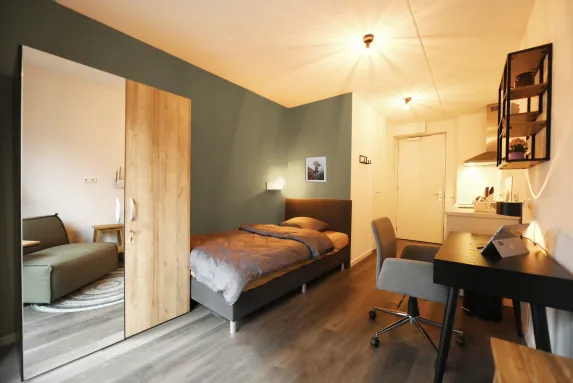
On a surface of 18 square meters the student has his own, fully equipped apartment with shower, toilet, bedroom and kitchen: you have complete privacy, but still are surrounded by fellow students.
To introduce this way of living to the public Wittenborg has invited members of the press, the local government, housing associations and the citizens of Apeldoorn for an Open House. Students, staff, management and teachers will be present to answer questions and show people around.
If you are near to Apeldoorn and curious to see the Spacebox ‘up and running’, feel free to come and have a look. Looking forward to seeing visitors from Apeldoorn and the region on Thursday!
Categories: Quality Management Internship Thu, 2011-11-10 23:3710/11/11 - On November 4, Ibrahim Shillingford finished his internship at Wittenborg. He started this internship on the 19th of July with the duel task of being an internal auditor for the checking of the effectiveness of Wittenborg’s quality control, and to propose solutions in cases where this quality control falls short. This he did through a systems audit, various interviews, and observation from within his internship.
From the many challenges (communicating professionally, developing analytic skills, “waking up early!”) Ibrahim learned to improve his auditing skills, and increase both his knowledge of European higher education systems, and quality control itself.
Ibrahim Vinikopoh Shillingford is Wittenborg Business School's first student from Nigeria. He arrived in the Netherlands on January 2009, and in his own words: “It was very cold!!.” Since then, he has displayed a determination, and motivation to excel in his studies, and this has not wavered in the slightest. He now approaches the last stages before graduation, and we wish him all the success that he deserves.
Student Tutor, Daniel O'Connell
Categories: One of the first Chinese students to ever study in Deventer Sun, 2011-11-06 16:34One of the first Chinese students to ever study in Deventer – Xin (Daphne) Wang
Daphne Wang currently works as Financial Administrator at Wittenborg University of Applied Sciences, alongside her teaching at Etty Hillesum, a local high school in Deventer, which she has done for a number of years. She is originally from Beijing, China and has special passion for Chinese language and the Chinese Culture. Her subject at the local high school in Deventer is, of course, the Chinese language.
Daphne joined Wittenborg a year ago after having worke for many years at financial departments in companies like Randstad Uitzendbureau (International Manpower Agency) and Kadaster (Netherlands Mational land Registry). In 1997, Daphne was one of the first Chinese students to study at the Rijkshogeschool IJselland, in Deventer, where in September 1997, she started her HBO Bachelor studes in “Bedrijfseconomie”.
“In those days there were no international classes for Chinese students! - I am so happy to now work in a truly international environment, after so many years of studying and working in a completely Dutch environment. I am also very pleased to hear that Wittenborg is going to organize a trip for students to go to Shanghai next year on an exchange programme with such renowned universities there. I would love to provide my expertise to help our University organize the trip.”
Categories: Excursion to Smurfit Kappa Zedek Sun, 2011-11-06 16:14Throughout the year and during all six lesson blocks, Wittenborg University arranges company excursions for all phase 1 and 2 business school students. Special research assignments are handed out to establish the connection between the course modules of that block and the excursion.
On November 2nd Wittenborg students visited Smurfit Kappa Zedek, an innovative packaging company whose customers include leading global companies such as Heineken, Philips, Unilever and Mars; brands that certainly sparks the students’ imagination! With course modules such as ‘Modern Principles of Marketing’ and ‘Procurement & Production’ the visit taps right into the core of the programme.
MarQuinho dos Santos, phase 2 student: “On arrival we were
welcomed by the managing director of the company Mr Jack Pieterson, who introduced us to Smurfit Kappa Zedek. After the presentation Mr. Pieterson and his sales manager) turned themselves into excellent tour guides and made effort in giving us a glimpse behind the scenes. This was my first excursion at Wittenborg and it was certainly a valuable one of which I’m glad I participated!”
Jack Pieterson also represents the Dutch employers association, VNO-NCW, at regional level (Stedendriehoek) and is a member of Wittenborg University’s Advisory Board.
Categories: Why Personal Development Planning? Tue, 2011-11-01 23:54PDP - the essense of a student's development.. by Wittenborg News - Tuesday, 1 November 2011, 11:52 PM
PDP – or “Personal Development Planning” – a core thread to Wittenborg’s business studies programmes, and its intensive student tutoring programme.
Wittenborg University Lecturer Daniel O’Connell talks about the long-term benefits of the PDP programme, and its added value to Wittenborg’s students.
Why Personal Development Planning?
“What has Personal Development Planning (PDP) got to do with my studies in IBA?” is a question that the author of this article has heard often enough. It is a fair and necessary question to ask, and one that has a particular answer for each recipient who poses the question. Herein lies the unique, yet subtle, value of PDP, and this value is encapsulated in the word “personal”.
Our world today is undergoing a great transformation that is not so unlike the great Industrial Revolution of the 20th century which precipitated great social change. As then, so now with this “ Information Age” do we have great social change, with consequences that is still being absorbed by society. So, what has this got to do with PDP?
With this wider, faster access to information, students in higher education are exposed to many opportunities in regards to planning their future. Universities around the world are releasing highly talented people into society, but - and one must ask in today’s present climate – to what kind of society?
It is now common knowledge that the world population is rising consistently, with each year adding more and more highly educated individuals into a job market that is presently suffering from well-publicized economic turmoil. It is not uncommon to now have many applicants, with all the necessary qualifications, making hopeful applications for vacancies. It is an employers market, with a glut of talent to choose from. So, what is that spark that will set one apart from the others?
Those with a strong and well-developed plan of themselves and the life they want, will, in the opinion of this writer, stand apart from those who do not. Having the right qualification will meet one criteria, but you will be one of many. However, knowing the competencies that are strong in oneself , together with an awareness of those that are somewhat lacking, leads to precise and intelligently-measured action. Additionally, the application of reflection upon the studies that one undergoes contributes to a personal empowerment that is automatically noticed by those whose responsibility is job-candidate selection. What are being described are core PDP values.
The answer to the question mentioned at the beginning of this article is: “Everything!” It is everything because it places the individual student face to face with themselves, and the opportunities to change, upgrade, adapt to a rapidly changing world, and, how they can begin to successfully apply their newly-acquired knowledge in a focused, and highly creative manner.
This is the spark that draws an employer’s attention.
Categories: Wittenborg University of Applied Sciences Students visit the Nicolaus Copernicus University Mon, 2011-10-31 21:2528/10/2011 - Wittenborg University of Applied Sciences Students visit the Nicolaus Copernicus University in Toruń, Poland and establish relations with the Polish students and Faculty there.
Independently initiated and organized by Wittenborg student Pouyan Kalanaki (Iran) and Saxion University student Agnieszka Plewa (Poland) in cooperation with Wittenborg University's Students’ Union, a group of Apeldoorn based Wittenborg Business School Students took advantage of the autumn free study period / holiday, as an opportunity to expand their knowledge and experiences by exchanging information with students from different areas and different cultures in Poland. The main objective of visiting Nicolaus Copernicus University was to realize a project with environmental protection students, mainly focused on sustainable businesses.
Professor Adam Czarnecki, of Nicolaus Copernicus University, opened the program by presenting the main pillars of their studies, to help Wittenborg students get to know their approach to business education, and in return the Wittenborg students presented the main aspects of business studies, Netherlands style, to the Polish environmental protection students.
The programme ended with all students uniting in mixed Wittenborg and Nicolaus Copernicus student groups to present a profitable and eco-friendly business idea.
Wittenborg University Business School Director, Peter Birdsall showed his admiration for the initiative; “at a time when most Higher Education students at Netherlands Universities and Business Schools are mainly concerned about doing just enough at University to gain study credits, it’s wonderful to see Wittenborg students taking their own initiative to expand their horizons together at a time when they could just take off on an individual holiday”. He added that Wittenborg University has planned two study trips for the spring term, with a week visiting the UK, where students can visit Wittenborg’s partner, the University of Brighton, and a special trade mission project week to Shanghai, China at which students will be able to spend a week visiting the campus of the Shanghai Business School, and visiting international companies and organisations in the city.
Categories: Wittenborg University Launches China Campaign for the first time since 2007 Fri, 2011-10-28 12:00Wittenborg University of Applied Sciences launches promotion and partnership campaign in Shanghai and Beijing.
The Business School has re-established links with its partners in China, setting the stage for a number of durable partnerships with 3 Shanghai Universities and completing promotional activities at 9 of the largest China-wide agencies.
Through the informal relationship Wittenborg holds with staff members at Shanghai’s Fudan University, Board Members Peter Birdsall and Maggie Feng were invited to hold important discussions with management of the Shanghai Business School, regarding joint development of progression rogrammes, the exchange of professors and students and the close cooperation of each other’s research centres. The agreement between both institutes is expected to be signed in December.
The first project will be to enable a group of Wittenborg’s students to travel to China and take part in a special China Project Week in the form of a trade mission to Shanghai in May of next year. During this week Wittenborg students will be introduced to the culture and business in Shanghai, staying at the famous University campus, visit various higher education institutes, follow guest lecturers, meet fellow students and also visit Dutch companies and organisations dealing with international business and trade in the city.
Talks were also conducted with the Shanghai Finance University in order to establish a partnership, and it is expected that a Memorandum of Cooperation between the two institutes will be signed before the end of the year.
Wittenborg also joined Shanghai University’s progression programme jointly offered in Shanghai with an Australian institute, and which will allow progression of students from Shanghai into specialisations at Wittenborg in Apeldoorn, including Economics and Management and Hospitality Management. During a tour of key Chinese Study Abroad Agencies, Peter Birdsall gave presentations to managers and counsellors on the programmes offered by Wittenborg, and the wonderful green city of Apeldoorn, that is fast becoming an attraction for international students in the Netherlands to live, study and work in.
Categories: Apeldoorn invests in International Students Thu, 2011-10-27 05:11 Apeldoorn aims to become an even more attractive destination for International StudentsThe city of Apeldoorn welcomes international students, and is planning to work with Wittenborg to make the city an excellent place for this important group of knowledge migrants to live, study, work and spend their leisure time. This was a clear message given during a debate between local politicians, civil servants, the Apeldoorn housing corporations and other representative groups of young people in the city.
The Higher Education organisations represented were Wittenborg University Business School and the Theological University. The Wittenborg Student Union was also represented, and made it clear that student’s main priority is to feel welcomed in the city and to be assisted with the process of integration and life in the town – by means of facilities and decent student housing.
Wittenborg Chairman Peter Birdsall made it clear that the “Space Boxes” that the school had realized in the centre of the town, were only an example of the excellent stimulus that an international student could bring to the town. Research has shown that each international student brings at least 25,000- euro per year to the city in which they study and live. International students and fully international schools such as Wittenborg, with its 46 nationality mix in a population of 200 students will be an essential asset in the coming years, with graduates, as skilled knowledge workers contributing to a ever increasing aging workforce.
During the debate, Saxion, the regions large general University of Applied Sciences was encouraged to consider housing its international students in the city, something that the school has resisted until now. The debate concluded with a call for closer cooperation between the institutions and organisations, and a commitment from the City of Apeldoorn to support and facilitate the expansion of quality student housing, and higher education for international students in the town.
This news in the Dutch press:
Categories: Dutch Government Confirms Value of International Migrants Tue, 2011-10-11 07:59Dutch Government confirms that international migrants give a positive impulse to the Dutch economy and culture. Minister Leers of Immigration indicated yesterday in The Hague that the Dutch government sees highly qualified knowledge migrants as essential for the Dutch economy. He stated that migrants bring innovative ideas and new insights to the Netherlands.
Truly International Higher Education
Of course, not all international students will continue their careers in the Netherlands, the majority leave to start their careers in their home country, or often in other countries, around the world. However, the true international environment those students will find in Holland places them in good stead to bring innovation to economies around the world.
Wittenborg University of Applied Sciences is renowned for its international mix of students and staff, who together represent more than 50 different nationalities, 5 continents and many different languages and cultures. (46 nationalities of students in table left). English is the main language spoken at Wittenborg, both in and out of the classroom.
International students in the Netherlands
According to the Nuffic (the number of international students who are in the Netherlands to obtain either a higher education diploma or credits (credit mobile students) on the basis of highly divergent sources of information, can only be estimated.
If the inbound flow of credit mobile students is 85% of the outbound group the entire group may comprise 81,700 students. This therefore accounts for approximately 59,200 international students who are in the Netherlands for the purpose of obtaining a diploma and 22,500 incoming credit mobile students.
With respect to the first group of 59,200 students, the Nuffic has derived information from their registrations in government accredited higher education and from student residence permit records. The latter applies to students from outside EU and EFTA countries. These concern a total of almost 56,600 students (non-EU).
With respect to the second group of 22,500 students, these are students registered through participation in the European Erasmus Programme and student trainee residence permit records.
This applies to 8,400 students. This takes the total number of international students about whom a larger amount of information is available to 65,000 (56,600 plus 8,400). Inbound mobility is rising compared with the same group in previous academic years
Categories:
Honorary professorship for outgoing Mayor of Apeldoorn, Fred de Graaf Sat, 2011-10-01 14:51“So, I am going to teach!” exclaimed Mayor of Apeldoorn, Fred de Graaf with a big smile!
Yesterday evening, Burgermeester de Graaf was presented with an honorary professorship from Wittenborg University of Applied Sciences during his farewell ceremony at the Apeldoorn City Hall. After 12 years as Mayor of Apeldoorn, Mr de Graaf will take up a new important position as leader of the Senate in the Netherlands Parliament. The ceremony was attended by many dignitaries including Prinses Margriet and husband prof.mr. Pieter van Vollenhoven, and the Canadian Ambassador who represents the strong ties between Apeldoorn and Canada. Speakers included the Mayor of Deventer, Mr Andries Heidema and Apeldoorn government councilor Mr Rob Metz. Wittenborg was represented by a select group of students and staff, who themselves represented more than 12 different countries!
The honorary professorship, known in Dutch as an ‘erelectoraat’, was presented during the closing ceremony by Wittenborg board members Mrs Maggie Feng and Mr Peter Birdsall, and will focus on the field of public administration and corporate governance. It is intended that Mr de Graaf will work with Wittenborg in presenting an Apeldoorn symposium which will be organized for local, national and international companies, organisations and education institutes and will look at issues such as sustainable entrepreneurship, sustainable leadership and corporate governance.
Categories: Ben Birdsall’s “Distilleries of Scotland by Vespa” Co-organized by Wittenborg Thu, 2011-09-29 15:53Ben Birdsall’s “Distilleries of Scotland by Vespa” Co-organized by Wittenborg
British writer and painter, Ben Birdsall, recently rounded off his “Scottish Whisky Distilleries Tour by Vespa”. The purpose of the trip was to present the rich Scottish Whisky culture through oil paintings and storytelling, which will be concluded in a book expected to be published by the end of 2011. The book will be titled “Distilleries of Scotland by Vespa”. For his new book Ben toured the Highlands, Orkney, and the Western Isles by vintage Vespa, visiting as many distilleries as possible during an 18-day trip from Edinburgh to Orkney, Speyside to Skye and Islay.
Starting out as a relative novice, his aim was to become a whisky connoisseur, gathering historical notes and getting a grasp of the processes and anecdotes connected with the craft. The trip was co-organized by Wittenborg, involving a student in gathering information and contacting whisky distilleries and whisky clubs. The trip was not-for-profit: all profit generated from this trip will be put into Wittenborg students’ future real-life business projects.
Ben Birdsall was born in West Yorkshire, England, and after graduating, he moved to Italy where he worked in the Australian painter Arthur Boyd’s studio in Tuscany. Always writing, his play ‘Staggart Lane’ was performed at the Edinburgh Festival Fringe in 1987 and in 1995 his novel ‘Blue Charm’ was published, being shortlisted for the Authors’ Club of Great Britain Best First Novel Award. In 2005 his short screenplay ‘Galatea’ was filmed in Italy by Australian artist, Jamie Boyd. In 2007, his ‘Tuscany by Vespa’ was published by Arteventbook, which also published ‘Vespa Valdera Tour’ in 2010. His ‘Umbria by Vespa’ is his latest completed work. Birdsall has exhibited paintings in Italy, Ireland, England and Switzerland, where he lives now with his wife and daughter.
To see more of Ben's work, please click here.
Categories: One-third of Postgraduate Research Assistants in the Netherlands comes from Abroad Tue, 2011-09-20 13:53One-third of Postgraduate Research Assistants in the Netherlands comes from Abroad
One-third of all Postgraduate Research Assistants (PRAs) in the Netherlands has a foreign passport. This amount increased considerably since 1996, the last year when research about this was conducted. Back then only 1 percent of them came from abroad.
© Transfer
According to the research into PhD routes of Utrecht University and Erasmus University Rotterdam, the brain drain of Doctors from the Netherlands is not that substantial. On the contrary, we can speak of ‘brain gain’ in the Netherlands, since a lot of foreign Doctors want to stay in the Netherlands after defending their dissertation.
The research on PhD-Trajectories and Labour Market Mobility was subsidised by the Ministry of Education. Back in 2005, the ministry already indicated that there was too little known about PhD routes and PRAs themselves. For this research, the University of Utrecht and the University of Rotterdam questioned 443 PRAs from Delft, Wageningen, and from their own home cities. They believe this group is representative for all PRAs in the Netherlands.
Most foreign PRAs in the Netherlands come from Western and Eastern Europe and Asia, the research shows. The reputation of the university or supervisor are the most important reason for foreigners to come to the Netherlands for a PhD. According to the researchers, the Netherlands does not have to worry about a brain drain. Although out of all respondents one-fifth wants to go abroad after getting their PhD title, a great amount of foreign PRAs wants to stay in the Netherlands, and only a handful of Dutchmen plans to leave the country.
The research also reflects on the career opportunities of PRAs in the Netherlands. Of all respondents, 86 percent turned out to have a job even before defending their dissertation. Amongst the people who were still jobless was no relative majority of foreigners. Most of the PRAs found a job in the academic world. Furthermore, the research shows that PRAs feel that their supervisors have sufficient foreign experience. Two-thirds of them state that they are given enough possibilities to build up international contacts.
Categories: Higher Percentage of International Students in the Netherlands Mon, 2011-09-19 15:06 Higher Percentage of International Students in the NetherlandsThe percentage of international students in the Netherlands continues to rise. In the past academic year, one in ten students at research universities came from abroad. Five years ago this was only 7%, or one in fourteen.
© NUFFIC
At universities of applied sciences the increase was smaller: from 6% in 2006 to 6.5% now. In total there are 81,700 international students in the Netherlands, coming from 61 different countries. These are some of the outcomes of ‘Mapping Mobility 2011’, a publication issued by Nuffic for the second year in a row.
Wittenborg: the Most International Private Business School in the Netherlands
Wittenborg Business School has, in contrast to many other universities in the Netherlands, students from truly all over the world, and not only from e.g. Germany and China.
At the moment, 75,9% of all students at Wittenborg are international. Nearly 40 nationalities are represented at Wittenborg at the moment.
Other Highlights
The publication also shows that the number of students in the Netherlands coming from the BRIC countries (the growing economies of Brazil, Russia, India and China) is on the rise. Nuffic actively promotes Dutch higher education in these countries through its Netherlands Education Support Offices.
Dutch Students Abroad
A total of 42,500 Dutch students went to study abroad, in a total of 80 different countries (figures from 2008). Their favourite destinations were the UK, Belgium, Germany, the US and Spain.
Nuffic thinks that many Dutch students are still not aware of the opportunities that await them abroad. The organisation encourages Dutch students to spend a period of time studying abroad, through its www.wilweg.nl website.
More Information
You can download ‘Mapping Mobility 2011’ from the mobility statistics page of the Nuffic website.
New Coordinator Bachelor Programmes on the Development of Wittenborg
As the new Coordinator of the Bachelor Programme, Rauf M A speaks about Wittenborg’s future development:
“There are great opportunities for an institute like Wittenborg to offer to its students. Being strategically located at a good place, it is a fact that Wittenborg has better prospects to have a greater offer in various subjects and specializations with emerging market demands. Wittenborg has built up a strong name in the market for delivering high quality business education to young and enthusiastic Dutch and international students (from over 37 countries). Being the most international business school in the Netherlands, this unique multicultural blend provides a great learning atmosphere to students in the classes, enabling them to think beyond boarders. At the same time it is a big challenge to fulfill the increasing demands of such a diverse group of students. Wittenborg’s mentoring policy is unique in the Dutch context, providing the best possible guidance to its students through a structured and monitored support system of tutoring. The tutoring system is designed to support students through keeping and maintaining record of all students by reviewing their progress and supporting in case of problems (e.g. related to keeping up with the pace of the programme). This system is widely appreciated by the students as they believe that this system ensures that they can graduate in time. Hence, individual as well as group tutors play an important role in each student’s academic life, enabling them to complete their degrees smoothly. In addition to academic learning, the External Relations department actively supports and helps students when it comes to excursions, study trips, work placements, and finding a job after graduation. This is also a significant impetus provided by the school: students should start a successful career after their studies.
There is always room for improvement and there are certain areas to focus on, which need to be formalized in a way in which they are in practice at the moment, to improve the strength of Wittenborg’s qualification(s). Pursuing a growth strategy, Wittenborg continues to invest heavily in high-quality resources in the shape of new staff members, engaging people with higher academic degrees, expertises, and scientific research and educational experiences. This unique input is vital for any academic institution striving to deliver high quality education. In addition to these resources, a special emphasis has been put on matters related to the development of course content, such as a new form of additional examination involving blind peer reviews, but also on more structural matters like the way in which module descriptions can motivate and convince students to get more knowledge of the subject at hand and improve their learning. This is vital for their successful future career in any industry after graduation. Wittenborg is implementing a stronger, more reliable and credible examination and evaluation system to guarantee the worth of its academic degree.

Furthermore, focus will be put on restructuring resources of Wittenborg to improve the academic learning quality. During the last accreditation panel visit earlier this year, it was even noted that criteria in certain areas are too ambitious at this level in this business school at the moment. This corresponds with our drive to maintain and further improve our internationally accepted high standard quality education in the field of business and social sciences. Wittenborg aims to maintain its position as a pioneer in the Apeldoorn region, in developing quality international programmes in the area of business which gives its graduates the right start in their career. The ultimate goal is not only to provide good quality education to current students, but also to continue building an institution which will have a long-term impact, not only in the region but also in students’ home countries, all across the globe. To achieve these goals, only the education cannot help much unless some efforts are taken to connect with the contemporary scientific research. For this Wittenborg is continuously building collaborations with partner institutes for conducting joint scientific research projects. Rauf completed an MBA in Marketing & Management, after which he functioned as a lecturer at a graduate college for three years. After moving to the Netherlands he completed an MSc in Business Administration with a specialisation in HRM at the University of Twente. Currently, Rauf is carrying out his PhD research in HRM.”
Categories: Head of Wittenborg Research Centre Dr Teun Wolters on the Development of the Centre Mon, 2011-09-05 16:45Head of Wittenborg Research Centre Dr Teun Wolters on the Development of the Centre
It is Wittenborg's vision that the development of the university should rest on two pillars: education and research. For the moment all activities emanating from this fall within the ambit of the business school, but this may change in the future.
The intended research activities will be accommodated by Wittenborg’s Research Centre, headed by Dr Teun Wolters. The research will be in the area of Dr Wolters’s research and teaching commitment (corporate sustainability including sustainable innovation) while there is also room for various research themes that are supported by Wittenborg’s stakeholders and other interested parties. The centre intends to have meaning for the local economy by doing research and consultancy for companies and other organisations in its surroundings.
The centre’s research is primarily of an applied nature, but by means of a careful coordination and pooling of resources it must be possible to generate new knowledge that can be published in academic journals.
By involving lecturers and students in the centre, the research will contribute to the build-up of a valuable body of knowledge. Here, three facets can be distinguished:
- Lecturers can add to the textbook knowledge specialised new knowledge by which they can enhance their teaching and supervision. The research leads to new knowledge in terms of research skills, fieldwork experience (direct contacts with companies) and new substantive knowledge on business and management.
- By coordinating students’ research work, the design and content of their papers can be enhanced. By setting up a coherent research programme, contributions of individual students can contribute to a broader knowledge build-up.
- By facilitating publications (at different academic levels), Wittenborg’s lecturers will be offered opportunities to enhance the quality of their work.
The centre will also develop contacts with external researchers and research institutes. In this way it can operate as a katalyst of interesting collaborative research. Recently, there are nascent forms of collaboration with universities and consultancy firms, that will be worked out in the near future
Categories: New Dean and Head of Research Centre at Wittenborg Mon, 2011-08-29 10:42New Dean and Head of Research Centre at Wittenborg
As from the start of the academic year 2011-2012, Teun Wolters will function as the new Dean of Wittenborg Business School. Besides overseeing the programmes Wittenborg offers, Teun will also be involved in starting up a new research centre: the Wittenborg Research Centre.
This new research centre (Wittenborg Research Centre) will deal with research in the field of e.g. sustainable entrepreneurship and sustainable energy. Besides experienced specialists, graduating students will be concerned with the centre. They will conduct research for their graduation project (lasting six months), while Wittenborg will make sure all individual graduation projects will connect to one another. Like this, a usable knowledge-base for the region (Apeldoorn and the ‘Stedendriehoek’ area – Apeldoorn, Deventer, Zutphen) will be built up. Teun Wolters: “The research which will be carried out will be of great use to local business in the Apeldoorn area. An example would be to setting up innovative projects which will facilitate a greener Apeldoorn. Next year, Wittenborg will start a new programme in which a lot of attention will be given to sustainable entrepreneurship: ‘MSc International Business & Management’”. In this programme, students will follow courses such as ‘sustainable entrepreneurship’, ‘sustainable innovation’, ‘business ethics’, and ‘socially responsible entrepreneurship’.

Wolters’ vision is to look strategically to the level of sustainability within business. According to the dean, especially the small and medium enterprises are not that well-prepared for the future in this area: “The world population is increasing, production is rising, but the earth will not grow along”, he says. “We want to advise companies on how to facilitate the necessary sustainability within their business conduct.”
Teun Wolters studied economics at the VU (Vrije Universiteit) in Amsterdam, where he obtained his PhD in the field of labor issues, and worked at e.g. TNO for a few years. At TNO he came into contact with scientific environmental issues. “Within the Wittenborg Research Centre, I want to work together with professional researchers and operate on the border of science and practice”, he says with an inspiring tone. “And it is my task as dean to safeguard the scientific quality of education.” Since Wittenborg is a private institution, it can set stricter demands when it comes to the intake of new students. “We do not want a mentality that a 6 (C-) is enough in this institution”, he determinedly states. “Students who come here must have a certain ‘drive’. There is a lot going on at Wittenborg and a lot is possible. The lines are short.”
At the moment, Teun is worried about the limited student housing in Apeldoorn. He would really like to turn Apeldoorn into a student city. Many students who study at Wittenborg return to their country of origin once graduated, to apply the acquired knowledge to e.g. a family business. Wolters also strives to keep alumni in the Netherlands, and especially in Apeldoorn. “It should be possible to get foreign students, who have already followed some form of technical education, to the Netherlands”, he says. “They can strengthen Dutch business.”
Categories: New Wittenborg Students Introduced To Apeldoorn Thu, 2011-08-25 12:48New Wittenborg Students Introduced To Apeldoorn
This week, an introduction day for new students starting their studies at Wittenborg Business School took place in Apeldoorn. Together with the municipality of Apeldoorn and the Theologische Universiteit (Theological University), students were offered a lunch at the city hall, an official welcoming speech, a city tour, and to wrap up the festivities, a barbeque. The introduction day was partly made possible by the Students’ Union of Wittenborg, which put a lot of hours in planning the event.
The new students from Wittenborg University come from all across the globe, including Iran, Greece, Saudi-Arabia, and the Netherlands.
Pictures of the introduction day can be found on the Wittenborg Facebook page. A special folder has been created
Categories: Download Wittenborg Graduation Photo Collection Thu, 2011-08-11 11:28Download - Pictures of Wittenborg University Graduation Ceremony July 2011
A collection of photos taken at the July 2011 Graduation Ceremony of Wittenborg Business School is now available for download.
Click here to download the ZIP file containing the photos.
Categories:
Student Housing in the Form of Space Boxes - New at Wittenborg University Wed, 2011-08-10 12:30Wittenborg Brings New Student Housing to Apeldoorn
At the start of the coming academic year, a new form of student housing will be brought to Apeldoorn by Wittenborg Business School: the so-called ‘Spaceboxes’. 24 of these colourful compact housing units of 3 by 6 meters, including a kitchenette, bathroom with shower, and living area, will be placed in the Molendwarsstraat in Apeldoorn.
Currently, most of Wittenborg University’s students are housed in apartments and houses throughout the city. The Spaceboxes will stay in Apeldoorn for the coming 5 years. In the future, permanent student accommodation will be realized and possibly centralized and located closer to the university itself. Thanks to fruitful collaboration between Wittenborg, housing corporations, and the local government of Apeldoorn regarding the Spaceboxes, readily available housing for the growing number of students arriving from abroad, including the newly enrolled students for the new Master programmes (such as the Master of Business Administration (MBA)), is ensured.
Apeldoorn alderman Hans Wegman, responsible for both education and housing, is very pleased with the development. “The Spaceboxes are more than welcome in Apeldoorn. During the period in which students study in Apeldoorn, they should have a place to live in. This is why good and affordable student housing is of the utmost importance.”
For years, the local government of Apeldoorn has been trying to expand the offer of higher education in the city, partly to fight the phenomenon called “young flight” (Dutch: jonge vlucht): students and young professionals moving to other cities to start their studies and careers. The wish for more student housing has been on the agenda for quite a while, and thus, the arrival of the Spaceboxes gives a positive impulse to this wish.
Future residents of the Spaceboxes can be satisfied with the location of their new homes. The central train and bus station, Wittenborg Business School, two supermarkets and the shopping area are all within walking reach. A concierge of Wittenborg University will function as a supervisor of the Spaceboxes, to make sure everything remains in order.
Tomorrow, Thursday the 11th of August, from 10 to 11AM, a press conference about this impulse for student housing in Apeldoorn will be held on-site at the Molendwarsstraat in the Haven-Centrum area. The Spaceboxes have already been moved to this location (see photo on the left).
Categories: Wittenborg Achieves Above-Average Scores in National Student Survey 2011 Fri, 2011-08-05 14:45Wittenborg Does Well in National Student Survey
Results from the National Student Survey 2011 (Nationale Studentenenquête 2011) show that students of Wittenborg University Business School in Apeldoorn are satisfied with the education they get, their school itself, and the city in which they study. Looking at the mean national results, Wittenborg scored above-average.
Wittenborg Business School scored above-average in 12 out of 15 categories. The table and graph displayed below show the scores. The scale of the scores ranged from 0 to 5 (best). Converting the scores to a scale of 1 to 10 and combining all categories, Wittenborg University scores a 7,0 average (national average = 6,8). Although this is a good result, Wittenborg Business School strives to heighten this mark to a 7,5 next year.
As shown in the table displayed above and the graph shown underneath, different aspects of higher education were dealt with in the questionnaire. Specific points in which Wittenborg excels (with scores more than 0,3 points above-average, on a scale of 1 to 5) are the suitability of classrooms (3,78 – 0,33 above-average), the information on rules and procedures (3,65 – 0,48), the availability of work spaces (3,6 – 0,62) and the information about outcomes of educational evaluations.
Other categories in which Wittenborg scored above-average are: the connection between the programmes of Wittenborg Business School and programmes on secondary school level, the level of contact between students and industry, the quality level of work placement guidance, class schedules, and the way in which Wittenborg deals with complaints and problems. Wittenborg University students also value the availability and affordability of living space in Apeldoorn. This positive judgement might be the result of the joint commitment of Wittenborg and the local Apeldoorn government for student housing and the related housing services.
The National Student Survey involves large-scale national research, organized by Studiekeuze123, carried out by the independent research agency ResearchNed and commissioned by the Ministry of Education, Culture and Science and the higher education institutions, in which every year, all students within higher education are invited to cast their opinion on the programme(s) of their university.